StratNavApp.com banner ad
Showing posts with label PESTEL. Show all posts

Dealing with 'inevitabilities' in business strategy

Many of the threats and opportunities we identify on SWOT and PESTEL analyses are uncertain. Things that might or might not happen. Or things that might happen one way or another. Others are simply trends which carry with them an air of inevitability.

For example, we don't know:

  • if antibiotics will lose their effectiveness or if medicine will find an alternative approach,
  • if the world will be able to reverse the effects of global warming and/or overpopulation, or
  • whether the current political trend to the right will continue, etc.

But, we can be pretty sure that:

  • products and services will continue to digitise,
  • data will become more important in the way the world functions,
  • autonomous vehicles will eventually replace human-driven vehicles, 
  • people will be more inclined to rent assets which they had previously had to own, and
  • AI will take on ever more complex tasks previously thought to need a human to perform them.

Of course, the distinction between these categories of uncertain and inevitable changes can be blurred. It can also depend on the lens through which you look at them. But in any strategic context and time-frame, you can usually distinguish between the two.

How should a strategist handle these inevitabilities?

One swallow does not a summer make

Every inevitability will have its doubters: people who think it will not come to pass. As often as not, this is because they simply don't want it to happen.

But as strategists, we must deal with the world the way it is, not the way we wish it were.

Even the strongest trends seldom proceed in a straight line. There are usually many setbacks and other surprises. The doubters will seize upon these as evidence that it will not happen. But, as Aristotle said:

One swallow does not a summer make.

There can be few recent examples as dramatic as the bursting of the dot.com bubble around the turn of the century. Many businesses went bust. I am sure that small fortunes were lost. At the time, many claimed that this was proof that people wanted to continue to do business as they had before. That the threat of technology had been shown to be a hollow sham. But, as much of a setback as it was, the dot.com trend recovered and strengthened.

Part of the strategists' role is to see through these setbacks and other anomalies and remain focused on the underlying trend.

Not 'if' but 'when' and 'how'

Once we've established that something is more or less certain to happen, we can stop worrying about if it will happen. We can start applying our minds to when and how it will happen.

The strategist should monitor such trends on an ongoing basis. Do recent events suggest that the trend is speeding up or slowing down, or likely to speed up or slow down? Are they evolving in a way which is different from how they started out or were originally expected to play out?

For example, Amazon changed the business of book distribution (and many other businesses!) forever. But fewer people had anticipated how Amazon was able to use its new-found power in the publishing industry to launch the Kindle where so many other e-readers had failed before it. Amazon now sells more ebooks than print books in what some have described as a 'reading renaissance'. (Source)

Being alert to these subtle changes in a trend which seems otherwise inevitable could be a source of significant strategic advantage. Especially where all of your competitors are also building their propositions around the same trend.

So, perhaps it is time to go back over your SWOT and PESTEL analyses:

  • distinguish between those which are uncertainties and those which are inevitabilities, and
  • ensure you have appropriate sense-and-respond strategies in place for each.
photo credit: Duncan Rawlinson - Duncan.co - @thelastminute Passage via photopin (license)

6 steps for using scenarios in strategic planning (info graphic)

I have been doing a lot of work with scenarios lately, and so I compiled an info graphic outlining the key steps to using them for strategic planning.

The 6 steps are:
  1. Scenarios are plausible stories about how the future might unfold.
  2. Use a PESTEL analysis to identify uncertainties in your future.
  3. Build an Impact/Uncertainty matrix to identify scenario drivers.
  4. Create a 2X2 matrix of the highest impact/highest uncertainty drivers.
  5. Forecast your business plan within each scenario to identify problems and opportunities.
  6. Evaluate your strategic options against each scenario for robustness.
I hope you enjoy the info graphic below. Please let me know what you think in the comments below the post.


See also:

How to evaluate and prioritise strategic options

Once you've developed a comprehensive list of strategic options, it's time to evaluate, prioritise, select and sequence the ones you want to pursue.

You should base your evaluation on four criteria:

  1. feasibility,
  2. strategic fit,
  3. interdependencies, and
  4. financial risk and reward.

Feasibility

An option may seem very compelling. But, if it requires you to build a time travel machine and teleport into a parallel universe, you're probably going to fail.

Feasibility is a measure of how easy it will be to execute an option.

One way to establish this is to cross-check the option against the strengths and weaknesses in your SWOT analysis.

  • Does the option capitalise on your strengths?
  • Would you have a distinct advantage over others who lack those strengths?
  • Does the option require strengths you don't have or where you are weak?
  • Would the option protect you from exposure to your weaknesses?

Of course, you may find the option requires capabilities which you simply did not evaluate when you originally did your SWOT. In that case, you may want to consider updating it.

Just because an option will be difficult for you to execute does not mean you should give up on it. When America decided to put a man on the moon, no-one thought it would be easy. But it is certainly an important consideration when weighing an option up against alternatives.

Strategic Fit

There is little point in starting to build a commanding position offering a product or service for which demand is in free fall.

Strategic fit is a measure of the future attractiveness of an option.

There are three techniques you can use to establish strategic fit:

  1. Cross-check each option against your strategic goals and objectives. Options which make a greater contribution to a greater number of your strategic goals are more attractive.
  2. Cross-check each option against the opportunities and threats identified in your SWOT analysis, PESTEL analysis and/or Porter's 5 Forces analysis. Do industry trends suggest that demand for a product, service feature or attribute is likely to increase or decrease? Does the option capitalise on recent or anticipated changes in order to operate more effectively or efficiently? Do other external factors mitigate in favour of or against this option?
  3. Cross-check each option against the strengths and weaknesses identified in your SWOT analysis and/or McKinsey 7S analysis. Is it a unique fit to your specific relative strengths and weaknesses? Or is it a me-to undifferentiated move?
  4. Cross-check each option against your scenarios. Options which produce good outcomes across all scenarios are better than those which produce even better outcomes in some scenarios, but poor outcomes in other scenarios.

Typically, strategic fit for Horizon 1 will be more impacted by strengths and weaknesses. Conversely, strategic fit for Horizon 3 options will be more impacted by opportunities, threats and scenarios.

A rigorous assessment of feasibility and strategic fit should also stop an organisation from meandering aimlessly in pursuit of the next shiny idea. Instead it helps to develop a portfolio of strategic options which is holistic and based on sound analysis.

Interdependencies

It is important to remember that not all strategic options are independent of each other. There may be:

  • Trade-offs and mutual exclusions. This is where going in one direction may make it harder, or even counterproductive, to go in another.
    or
  • Dependencies. This is where executing one option first may make it easier to implement another one second.

It is important to identify these before proceeding to look at financial risk and reward, as these interdependencies can have a significant impact on financial costs, benefits and risks.

The matrix below illustrates a simple approach to bulleting out the potential interdependencies between options (additional supporting documentation may be required):

A strategic dependency matrix

Financial Risk and Reward

Financial risk and reward is probably the most widely written about of the 4 criteria. It is also the least strategic in that it can be applied to any project on a standalone basis. However, having worked through the other three criteria have a significant impact in understanding the costs and risks of implementation (feasibility & interdependencies) and the size and risk of the prize at stake (strategic fit and, again, interdependencies).

There are a number of ways of assessing financial risk and reward, including NPV, Profitability Index, IRR, Payback Period, Discounted Payback Period, etc. each with its pros and cons. Discussion of these is beyond the scope of this post. (If there is demand, I may consider a future post - please let me know in the comments.) All of these methods are based on future expected cash flows. Again, there are numerous ways of calculating these, and again, they are beyond the scope of the post (but could be the subject of a future post if there is demand).

It is self-evident but never-the-less worth stating that all of these methods of assessment are only as good as the forecasts on which you base them. Garbage in - garbage out. Furthermore, forecasts are notoriously unreliable, and probably more so as the options you're evaluating get more innovative and strategic. 

It is important to undertake financial risk and reward forecasts as they force you to confront difficult to answer questions. However, it is equally important not to then believe that your forecasts are somehow factual or accurate.

Bringing it all together

Once you've evaluated all of your options against each of the 4 criteria, you're in a position to review your portfolio and to start making choices.

Start by assigning a simply High, Medium and Low score to each option for each of Feasibility, Strategic Fit and Financial Risk and Reward. The result can easily be translated into a total score from 3 to 9 by giving one point for a Low and 3 points for a High. The options can then be sorted based on that score. Finally, where there are dependencies, you can remove any lower scoring options which are mutually exclusive with higher scoring options. Also, if any preceding options score less well than their succeeding options, move the preceding options to just before the succeeding options.

The strategic portfolio analysis matrix provides a useful way to visualise the solution.

This basic approach will yield a prioritised list of options from which you can build a roadmap for delivering your strategy. There will inevitably arise situations where you disagree with the result. Any system for prioritisation will give you an indication but not a definitive solution. So if you really think you should change what the formula spits out, then do so. But do it consciously. And make sure you document and agree your reasons so that you're not left second guessing yourself later.

Once you've evaluated and prioritised your strategic options, you're ready to move on to build your implementation roadmap. But that will have to wait for another post.

Do be sure to signup to receive email updates to make sure you don't miss it if you've not already done so - just enter your email address in the panel to the right at the top of the page.

The consistently popular SWOT analysis

A recent Google Trends analysis (see below) highlights some interesting insights in the popularity of some of the most widely used Strategy Analysis tools:
The chart above shows the popularity, measured in terms of Google search frequency, of 5 popular strategy analysis tools. (Google Trend analysis allows only 5 search terms at a time.)
  1. McKinsey 7-S
  2. Strategy Canvas
  3. PEST analysis
  4. Porter's 5 Forces analysis
  5. SWOT analysis
Looking at this analysis, I draw 3 interesting conclusions:
  1. Despite being much maligned by many as being too simplistic to be of any real value, the humble SWOT analysis is the most popular of the three models by a wide margin. This is consistent with my own experience: the SWOT analysis is the cornerstone of any analysis, and whilst it is easy to abuse, it is a vital tool when in the hands of a skilled strategist.
  2. The popularity of all of the search terms, especially "SWOT analysis" is noticeably seasonal, peaking each November and March. This suggests that interest is still tied to some annual planning process. It is disappointing to see that strategy is still seen as a periodic episode linked to some financial and business planning calendar and not a more fundamental way of thinking about how a business is run on an ongoing basis.
  3. Finally, the popularity of all search terms appears to be gradually diminishing over time. It would be heartening to believe that this is simply because everyone is now familiar enough with these terms to no longer need to search them on Google, but my own experience suggests that it is more likely to be because people are more inclined to chase the latest fad rather than relying on fundamental strategic analysis, as suggested by the Strategic Learning framework..

How to do a PESTEL analysis

Image of PESTEL Analysis
PESTEL Analysis

Contents

What is a PESTEL analysis?

PESTEL analysis is a business strategy framework which is used to identify, categorise and analyse the key external threats and opportunities a firm faces now and into the future. 

The six letters in PESTEL represent the 6 most common categories used: P for Political, E for Economic, S for Social (or Socio-Economic), T for Technological, E for Environmental and L for Legal.

It is often termed a macro-scanning tool. This is because it involves looking a the big-picture long-term changes in the external environment. (The external environment is also sometimes called the macro-environment.)

A PESTEL analysis is a key input to most strategy development and execution processes.

Why should you do a PESTEL analysis?

The PESTEL analysis is an essential strategy analysis tool for any strategist's toolkit.

Together with other tools such as Porter's 5 Forces analysis it encourages firms to consider the external environment in which they operate. This is particularly important for more established, mature firms, which have a tendency toward bureaucracy and become inward-looking.

PESTEL analysis can also provide a more forward-looking perspective by flushing out trends. This can provide advance warning of potential threats and opportunities, giving the firm more time to react. The different possible outcomes from these trends can then also be combined and developed into scenarios.

PESTEL analysis is particularly powerful when used:

What goes in each of the 6 categories on a PESTEL analysis?

Different factors will be more or less important to different businesses or industries. The descriptions below attempt to be as broad and comprehensive as possible so that you can choose what you think is relevant to your situation.

Political

The Political sector includes any government, parastatal and special interest group actions or lobbying in the form of policy, legislation, taxes and duties. It also considers the stability or instability of governments. It is important to understand the political agenda and how it might move for or against certain industries or practices.

This might include:

  • 'positive' moves such as the subsidies offered for alternative green energy production, or
  • 'negative' moves such as increasing taxes on alcohol or tobacco.

Depending on your firm, it may be important to consider both domestic policy as well as international policy, trade policy and pressure groups.

Quick checklist

  • Government policy
  • Legislation
  • Political harmony/conflict and stability/instability
  • Elections and coalitions
  • Foreign trade policy, restrictions and agreements
  • Tax policy
  • Labour policy
  • Forthcoming elections and election cycles
  • Government stability
  • Lobbying activity and protests
  • Defence policy and spending
  • Terrorism, war and other military considerations
  • Environmental policy
  • Funding grants and initiatives
  • Subsidies and tariffs
  • Fiscal policy
  • Freedom of speech and the press
  • Government bureaucracy

(See, for example, Three different regulatory responses and their impact on industry.)

Questions to ask:

  • Is the political environment stable? If not, how might it change?
  • What government policies or political groups could be beneficial or detrimental to the firm's success?

Economic

The Economic sector includes the general economic environment and the effects that this might have on the business and its customers, distributors and suppliers.

In conducting your analysis, it is important to distinguish between

  • long-term trends and structural issues, and
  • seasonal or cyclical issues.

Quick checklist

  • Economic growth (e.g. GDP)
  • Interest rates
  • Exchange rates
  • Inflation
  • Disposable income of consumers and businesses
  • Savings and investment rates/propensity to spend
  • Taxation
  • Wages (both absolute levels and growth rates)
  • Employment/unemployment rates
  • Financial markets
  • Property prices
  • Commodity and raw materials prices
  • Availability of finance/credit
  • Supply and demand factors
  • Cycles and bubbles

These might operate in aggregate or on a sector-specific basis.

Internationally, you might also consider:

  • import/export conditions,
  • foreign exchange conditions, and
  • trade deficits/surpluses.

Questions to ask:

  • How, specifically, do each of the different economic factors impact the firm's business?
  • What factors could cause an improvement or deterioration in each of the different economic factors?

Social

The Social sector considers changes in social preferences and norms. This is sometimes also called the Socio-Economic or Socio-Cultural sector.

Quick checklist

  • Demographics, including
    • Population growth
    • Population age distribution
    • Birth and death rates
  • Family size and dynamics
    • Marriage, divorce and cohabitation
  • Living standards
  • Wealth distribution
  • Ethnic and religious view and norms
  • Health and health consciousness
  • Education standards
  • Career choices and attitudes
  • Work patterns and preferences, including attitudes towards
    • retirement
    • flexibility
  • Customer preferences and buying trends
  • Leisure activities and lifestyles
  • Cultural trends
  • Fashion trends and fads
  • Industrial reviews and consumer confidence
  • Organisational image
  • Attitudes towards the government, business and equality/diversity (race, gender, ability, foreigners/immigrants, minorities, etc.)
  • Crime

Questions to ask:

  • How do our customers' circumstances and attitudes affect their buying habits?
  • How are our customers' and other stakeholders' circumstances and attitudes changing?

Technological

The Technological sector considers the impact of all forms of technological development and innovation.

This could include

  • new ways of producing goods and services
  • new ways of distributing goods and services, and
  • new ways of communicating with and engaging customers, suppliers and distributors.

The development of information technologies, including the internet and associated technologies such as mobile access is obviously a major factor here. This includes both the consumer and business-to-business applications of this. But it also includes improvements in manufacturing processes, materials, energy and transportation.

Quick checklist

  • Research and development capability and pipelines,
  • Producing goods and services
  • Distributing goods and services
  • Communications infrastructure
  • Digital and mobile technologies
  • Automation
  • The Internet of Things (IoT)
  • Emerging technologies
  • Technological lifecycle: including maturity and obsolescence
  • Target market communication
  • Copyright or patent protection for intellectual property ("IP"), and their efficacy
  • Increased training required to use new technologies
  • Potential return on investment from new technologies
  • Technological awareness and proficiency

Questions to ask:

  • What innovations and technological innovations are available or on the horizon?
  • How might they affect the firm?

Environmental

The Environmental sector has become increasingly important in recent years as stakeholders have become more conscious of humankind's impact on the natural environment.

Consider:

  • changes and opportunities throughout the value chain which could impact the environment, including,
  • opportunities to communicate what the organisation is doing about them more effectively, and
  • Corporate Social Responsibility (CSR) where businesses contribute to societal goals either through how they operate and/or through philanthropic activities such as volunteering or charitable donations/activities.

Quick checklist

  • The availability of raw materials
  • Pollution and greenhouse gas emissions
  • Positive business ethics and sustainability
  • Carbon footprint
  • Climate and weather
  • Natural disasters
  • Renewable energy, waste management and recycling
  • Environmental legislation
  • Geographic location and accessibility

Questions to ask:

  • How is the physical environment changing and how will this impact the business?
  • How are attitudes towards the business's impact on the physical environment changing>

Legal

Finally, the Legal sector looks at changes in laws, lawsuits and regulations which affect the business. These can be general changes in the industry, or specific lawsuits or regulatory interventions or sanctions which the business is facing.

Quick checklist

  • Health and safety regulations
  • Equal opportunities laws
  • Advertising standards rules
  • Consumer rights and protections
  • Privacy and data protection laws
  • Product labelling requirements
  • Product safety requirements
  • Safety standards
  • Employment/labour laws
  • Anti-trust and competition laws
  • Copyright, patent, intellectual laws
  • Licenses and permits

Note that there is often a high cross-over between political and legal factors. However, while political policies may create certain advantages and disadvantages, legal factors must be complied with.

Questions to ask:

  • What laws and regulations apply to the business across all of the markets in which it operates and how do they help or hinder the business?
  • How might these laws and regulations change?

What are some variations of PESTEL analysis?

There are several variations of the traditional PESTEL analysis. These include:

  • PESTLE analysis: a simple re-ordering of the last two letters/categories.
  • PESTLIED analysis: includes additional letters/categories for International and Demographic.
  • STEEPLE analysis: includes a third E for Ethical.
  • STEEPLED analysis: like STEEPLE but also including a D for Demographic.
  • SLEPT analysis: a simple re-ordering of the letters/categories, with the Environmental category removed.
  • STEPE analysis: a simple re-ordering of the letters/categories, with the Legal category removed.
  • PEST analysis: a simplification without the last two letters/categories for Environmetal and Legal.
  • STEP analysis: PEST in a different order.
  • LONGPEST / LONGPESTEL: LOcal, National and Global factors plus PEST or PESTEL.

In addition, the L is sometimes taken to mean Labour, rather than Legal.

The existence of all of these variations drives home the fact that it does not really matter which words and letters you use as long as you have a systematic review of the competitive environment.

How to do a PESTEL analysis

There are a number of steps you can take:

  1. Brainstorm: get a cross-section of people together from different areas and functions with the business to brainstorm some initial ideas.
    • Use the suggestions and questions outlined above for each section as input to your brainstorm.
    • Brainstorm not just what is happening or could happen, but also what the positive and/or negative impact on the business could be.
  2. Consult: seek the opinions of experts from outside your business.
    • These could be customers, distributors, suppliers, consultants, academics or any other experts.
  3. Research: gather evidence for each insight in your PESTEL analysis.
    • It is important to not only look for evidence which supports the insight, but also to gather any evidence which might contradict it. Few things in a PESTEL analysis are guaranteed cut and dried.
  4. Evaluate: score each of the items on your PESTEL analysis for:
    • likelihood: if it is not already happening, how likely is it to happen.
    • impact: how big an impact could it have on the business.
    • You can let all members of a team score each insight individually, and then debate until the scores start to converge.
  5. Refine: repeat the process until you have narrowed it down to a manageable number of clearly articulated and insightful points in each of the 6 categories.

How to do PESTEL analysis well

PESTEL analysis, like SWOT analysis is frequently criticised. Usually, this is usually on the basis of an analysis that has been done poorly. For example, PESTEL analysis often degenerates into long lists of 'things' without context, relevance or evidence. Don't fall into that trap. If you do, most of the time you spend doing PESTEL analysis will be wasted.

As you work through each quadrant, it is important to identify and document:

  • What is happening or could happen?
  • What is or could be the impact on your firm/division/department? (That is, be sure to answer the proverbial "So what?" question.)
  • What evidence you have to support this assessment?

A good way to express something on a PESTEL would be along the lines of:

X could/will/is caus(e/ing)/lead(ing) to Y (which leads to Z)
with evidence provided in supporting paragraphs and charts. 

Depending on how thorough you are being, you could also try to quantify the likelihood and impact of various levels of change happening, and the time frames over which they might happen.

Finally, you should consider the environmental signals you intend to monitor to stay abreast of any changes, or the actions you might take to influence the outcomes (such as joining an industry or policy group and or lobbying for changes).

Avoid the temptation to make decisions based on individual insights from your PESTEL analysis. Instead, base decisions on the balance of evidence across the whole of the PESTEL analysis and within the context of all of your other strategic analysis and priorities.

Where can I get a PESTEL analysis template?

You can easily create a simple PESTEL analysis template in common programmes like Microsoft Word, PowerPoint or Excel using a simple table structure.

Alternative, you can build a PESTEL analysis, alone or with a team, using a tool like StratNavApp.com. StratNavApp.com is the online collaborative tool for business strategy development and execution.

Using a purpose-built tool like StratNavApp.com has a number of advantages. For example, StratNavApp.com will:

  • Keep track of which users made which changes to your PESTEL analysis, and when.
  • Help you collect and link evidence in support of each insight on your PESTEL analysis.
  • Link insights from your PESTEL analysis to other appropriate areas of your business strategy.
  • Free accounts are available, it works on all devices and no other software (other than a browser) is required.

Examples of PESTEL Analysis

Here are some examples of PESTEL Analyses.

How often should you do a PESTEL Analysis?

It depends on how quickly your industry and competitive environment changes. These days, the pace of change for most businesses is quick rapid. So you should probably review your PESTEL analysis at least every 6 months.

A better approach, however, is to monitor the environment on a continual basis. Nominate specific people in your business to keep an eye on different sectors in your PESTEL analysis. Choose people who have natural if not professional interest in that subject. Ensure those people are reading the relevant journals, and talking to your suppliers, distributors, customers and other stakeholders about their allocated sector on an ongoing basis. Charge them to keep the analysis up to date and alert the rest of your team if there are any material changes in their sector.

A tool like StratNavApp.com will make this easier to do.

See also:

14 essential tools for strategy analysis [Updated 2023]

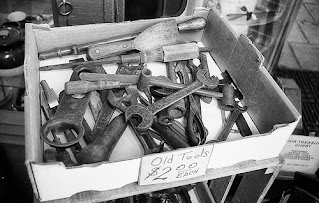
Picture of a box full of old tools

Strategic Analysis is a core step in the Strategic Learning Cycle. Every strategist should have a toolbox of analytical models at his or her disposal.

Having the right tools won't necessarily make you a good mechanic. Nor will having the right strategy analysis tools make you a good business strategist. But they will help a good strategist get the job done more effectively.

Here is my list of 10 essential strategic analysis tools:

1. SWOT

The SWOT is the most basic form of strategic analysis. Simply list the organisation's Strengths, Weaknesses, Opportunities and Threats. (learn more about SWOT)

2. Porter's Value Chain

The value chain is a simple (graphical) method for identifying and describing a firm's main functions and understanding how they contribute to value creation. (learn more about Porter's Value Chain)

3. The Strategy Canvas

The Strategy Canvas was popularised in the book "Blue Ocean Strategy" by W. Chan Kim and Renee Mauborgne. You can use it to understand how a firm differentiates itself from its competitors and other alternatives. (learn more about the Strategy Canvas)

4. The Business Model Canvas

Alexander Osterwalder and Yves Pigneur introduced The Business Model Canvas in the book "Business Model Generation". It is a very effective way of describing the key components of a business model. You can use it as the starting point for strategic analysis as well as for exploring alternative business models. (learn more about the Business Model Canvas)

5. PESTEL

The PESTEL is a macro-scanning framework which is useful for ensuring that you consider a broad range of possible sources of opportunities and threats. The letters represent the Political, Economic, Social (or Socio-economic), Technological, Environmental and Legal opportunities and threats in the firm's environment. (learn more about PESTEL)

6. McKinsey 7S

The McKinsey 7S is useful for ensuring that you consider all aspects of the organisation when identifying its strengths and weaknesses. The 7 Ses stand for: Structure, Systems, Style, Staff, Skills, Strategy and Shared Values. (learn more about McKinsey 7S)

7. Porter's 5 Forces

Porter's 5 Forces model is another framework for identifying threats and opportunities within the firm's environment. It considers the bargaining position of suppliers and customers (including distributors), the threat of new entrants and substitutes, as well as competitive factors within the industry itself. (learn more about Porter's 5 Forces)

8. Pareto Analysis

A Pareto Analysis is based on the maxim that 20% of the products, services, customers or distribution deliver 80% of the profits. A Pareto chart is a useful visualisation for showing this. However, its accuracy depends on the reliability of your cost allocation system. (learn more about Pareto Analysis)

9. BCG Matrix

You can apply the BCG Matrix to any business with more than one product or service line, or more than one customer segment. Plot the market share against the market growth rate for each product, service or customer segment. Then consider strategic options based on their relative position on the chart. (learn more about BCG Matrix)

10. Scenario Analysis

The future is inherently uncertain. Fortunately, good business strategy only requires you to be able to anticipate the future. You don't need to be able to predict it. Scenario Analysis is a tool to help you to anticipate multiple different futures. This allows you to construct your strategy around the premise that you can't be sure which, if indeed any, of them will come to pass. (learn more about Scenario Analysis)

11. Value Proposition Canvas

The Value Proposition Canvas helps to understand what a particular customer segment and how the business satisfies it (the value proposition). For each segment, it allows you to match the customer segments Jobs to be Done, pains and gains. These are then matched against the organisations products and services, gain creators and pain relievers. Pains, gains, pain relievers and gain creators help to move the perspective from the what to the why of an organisations value proposition. This supports better strategic analysis, as well as more strategically aligned marketing.

Given that the customer segments and the value proposition both appear on the Business Model Canvas, the Business Model Canvas and Value Proposition Canvas make very complementary companions. (learn more about the Value Proposition Canvas)

12. Lean Canvas

The Lean Canvas is a version of the Business Model Canvas which is favoured by some people for use in the early stages of conceptualising a new startup. 6 of the 9 categories are identical to those on the Business Model Canvas. However, whereas the Business Model Canvas includes Key Partners, Key Activities, and Key Resources, the Lean Canvas replace these with Problem, Solution and Key Metrics. The similarities between the two make it easy to progress from one to the other as your thinking evolves. (learn more about the Lean Canvas)

13. The Ansoff Matrix

The Ansoff Matrix is a strategic planning tool that helps businesses determine their growth strategy by exploring four key areas: Market Penetration (selling existing products to existing markets), Product Development (introducing new products to existing markets), Market Development (expanding into new markets with existing products), and Diversification (offering new products to new markets). This framework assists in evaluating the risks associated with each strategy, making it a valuable tool for businesses looking to expand or consolidate their market position. (learn more about the Ansoff Matrix)

14. The Balanced Scorecard

The Balanced Scorecard is a strategic tool used for performance management. It translates an organization's mission and vision into tangible objectives and measures across four perspectives: Financial, Customer, Internal Business Processes, and Learning & Growth. By balancing financial measures with those from these additional perspectives, it provides a more comprehensive view of business performance. This approach helps organizations monitor and manage their strategies effectively, ensuring that short-term achievements are aligned with long-term goals. (learn more about The Balanced Scorecard)

You can work with all of these strategic tools online in the StratNavApp.com online application. It's free. And if you are working in a team, you can collaborate with your team members in building your strategic models. Click here to get started.

See also: